At last I can show you some of the Cubist Collages made by students in 1st ESO. It has been a hard and long work, but some of the results (but not all of them) are so good.
Here they are:
You can also see the complete activity here.
Es mostren els missatges amb l'etiqueta de comentaris collage. Mostrar tots els missatges
Es mostren els missatges amb l'etiqueta de comentaris collage. Mostrar tots els missatges
diumenge, 21 d’abril del 2013

dimarts, 29 de gener del 2013
CUBIST COLLAGE. 1st ESO
Recently, we've been talking about shape, another basic element of the visual language.
We've been doing some activities about shape, paying special attention at edge, outline and inside contour line.
The last work we're going to do is a Cubist Collage using a Picasso's artwork, "Three musicians", as a model.

In this artwork, Picasso didn't use the collage technique, but he painted in Cubist Style and gave the appearence of cut paper.
CUBISM
Do you know who the Cubists were?
Cubism was a truly revolutionary style of modern art
developed by Pablo Picasso and Georges Braque. It was the first style
of abstract art which evolved at the beginning of the 20th century in
response to a world that was changing very quickly.
Cubist Artists tried to change conventional forms of representation, such as perspective. Their aim was to develop a new way of seeing which reflected the modern age.
The Cubists introduced collage into painting, and they were influenced by art from other cultures, specially African Masks.
Another important Cubist Artist was Juan Gris.
 |
| Pablo Picasso - Horta de Sant Joan (oil on canvas, 1909) |
 |
| Georges Braque - Landscape in l'Estaque (oil on canvas, 1908) |
 |
| Juan Gris - Le Canigou (oil on canvas, 1921) |
Try to learn more about Cubism in Artyfactory.com
You can also test your knowledges about Cubism here.
COLLAGE
Collage is an art technique where the artwork is made from an assemblage of different forms, thus creating a new whole.
Collage can include different materials as newspapers, coloured papers, photographs, texts, and also fabric or any kind of object, all them glued to a piece of paper or canvas.
The word "collage" means "to glue" ("coller" in French means "glue"), and was invented by George Braques and Pablo Picasso in the beginning of the 20th Century. It became an important part of Modern Art.
I'm sure you've done a lot of collage artworks at school, haven't you?
Ok, we can start our work watching the next video (in Spanish):
And we can practise online collage using these multimedia aplications:
- Collage machine 1.0
- Collage machine: you need the Shockwave plug-in.
- Remix, an interactive collage (MOMA)
- Collage Maker: faces collage
PABLO RUIZ PICASSO
It's time to talk about one of the most important artist in Art History. He was a Spanish painter, he was born in Malaga in 1881 and his name was Pablo Ruiz Picasso.

As you've read above, he was one of the first Cubists, and he also developed collage techniques.
His Artwork includes different Art Periods:
 |
| Picasso - The Pan Pipes (1923) |
- Early times (before 1901)
- Blue Period
- Rose Period
- African-influenced Period
- Cubism
- Classicism and Surrealism
- Later works
Can you find an example of any Period in the Internet? Paste the pictures into a powerpoint . It should show the next information:
1st slide: Tittle: Picasso's Art Periods. Autor (your name)
2nd slide: Tittle: Early times. Image: a picture from Picasso's early times artwork. Under the picture, write the name of the artwork.
3rd slide: Tittle: Blue Period. Image: a picture from Picasso's Blue Period artwork. Under the picture, write the name of the artwork.
And continue until Later works.
You can find more information here: www.pablopicasso.org
When finished, send your powerpoint to Evip's e-mail.
An amazing game: try to build a Picasso Puzzle of one of his most famous paintings: Guernica.
AND AT LAST BUT NOT AT LEAST...
As I told, we're going to reproduce Picasso's Artwork "The three musicians" using the collage technique.
You will need:- An A3 cardboard (where the collage will be glued)
- Coloured paper (cardboard, silk paper, tissue paper, wrapping paper...)
- Newspapers
- Pictures
- Scissors
- Glue
- Wax crayons
dilluns, 8 d’octubre del 2012
RECYCLED PORTRAITS BY HANOCH PIVEN. 1st ESO
Hanoch Piven is an Israeli artist who was born in Uruguay in 1963. He has been living in Barcelona for some years, but at this moment he's living in Israel.
He is famous for his celibrity caricatures, created as collages using common objects and materials, including stuff that might be associated with the subject (for example, tiny brains for a Stephen Hawking's portrait)
His caricatures appear in important newspapers and magazines all around the world: Time, Newsweek, Rolling Stone, The Times, ...
You can learn more about him and his artwork in the webpage: www.pivenworld.com
Here you can see some of his caricatures:

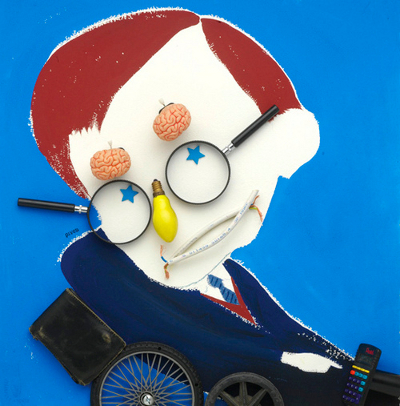


Can you recognize any of them?
divendres, 28 de setembre del 2012
divendres, 4 de maig del 2012
WORKING WITH TEXTURES. 1st ESO
Here you can see the artworks that students in 1st ESO have done using different materials (wax crayons, paintings, paper, newspapers, rice, beans, sand...) to create texture effects. They had to choose a famous artwork and recreate it: "Sunflowers" or "The artist's room", by Vincent Van Gogh, "The Scream" by Edvard Munch, "The cock" by Joan Miró, or "Girl with watering can" by Auguste Renoir.
I've choosen only a few of them.
If you want to know about the complete activity: Textures
I've choosen only a few of them.
If you want to know about the complete activity: Textures
dilluns, 16 d’abril del 2012
RESULTATS D'AUTORETRAT AMB HISTÒRIA. 2n ESO
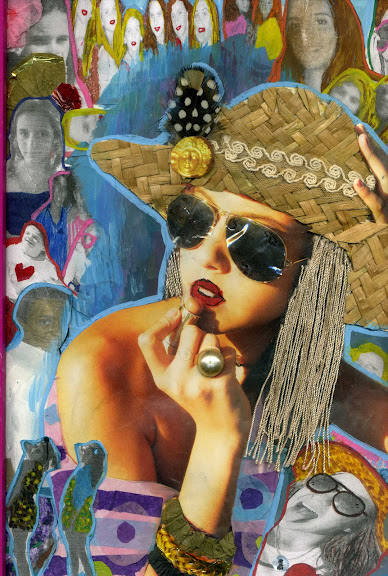
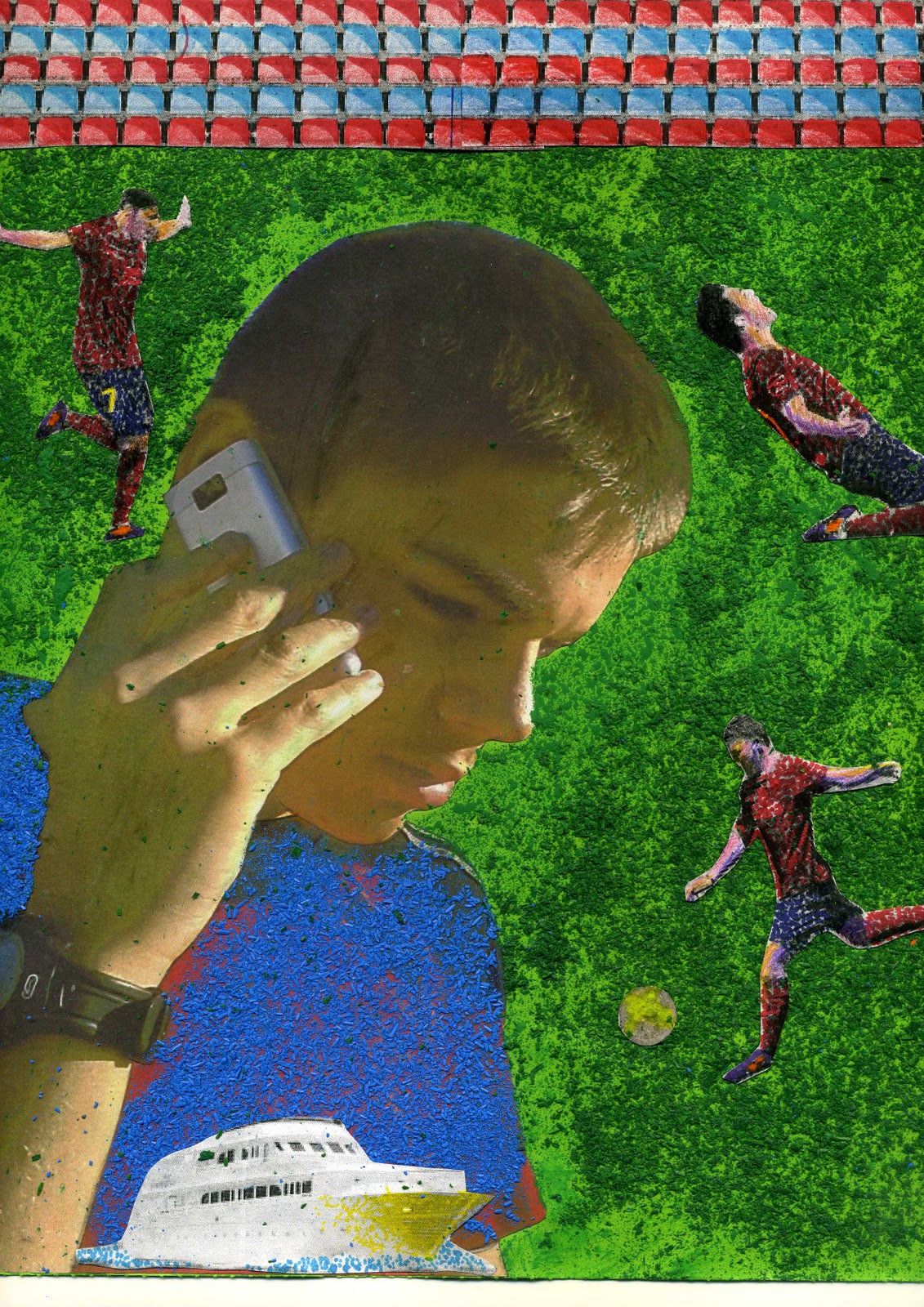
La darrera activitat del segon trimestre, l'Autoretrat amb història, us ha resultat bastant dificultosa. Les llistes en què us havíeu de basar per definir la vostra identitat (identitat a partir de l'estil, identitat a partir dels objectes i identitat a partir d'un mateix) es van limitar a qüestions molt superficials. La majoria de vosaltres us vau quedar amb els amics, la mascota i poca cosa més. A mi m'hauria agradat que haguéssiu aprofundit una mica més en el que sou i que haguéssiu estat capaços de mostrar-ho amb més força i creativitat, utilitzant tots els materials que us vaig proporcionar i els que haguéssiu pogut imaginar. Tot i això, he de dir que els treballs resultants us fan justícia, és a dir que us representen ben bé a cadascú de vosaltres.
Cal destacar que alguns de vosaltres heu fet una bona feina, amb fotografies originals i divertides que han donat lloc a uns treballs bastant correctes.
Aquesta vegada no penjo tots els treballs, sinó que n'he escollit uns quants, els que m'han semblat més elaborats i significatius.
diumenge, 18 de març del 2012
TEXTURES. 1st ESO
Texture is one of the elements of visual language. Everything, including works of art, has a texture or surface.
In this unit we will discover how many types of textures we can meet and some techniques we can use to create texture effects.
In the next slides you can learn some interesting things about textures:
You can also watch to these videos. They show some techniques to create textures:
Practising textures in the Net
1. Jackson Pollock was an American artist who painted creating different textures. He had an special style called drip painting. You can see him painting in this video:
In the web page jacksonpollock.org, you can try painting in his particular style.
2. Virtual Collages
Collage is one of the most used art techniques to work with textures.
Thanks to the blog "Las TIC en plástica" I've found some interesting applications to perform virtual collages.
- Collage Machine 1.0
- Remix, interactive collage, from de MOMA (Museum of Modern Art) of New York.
- Collage maker: doing collage using parts of portraits.
dilluns, 27 de febrer del 2012
AUTORETRAT AMB HISTÒRIA. 2n ESO
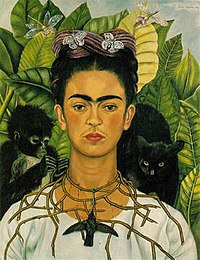
Frida Kahlo - Autoretrat amb collaret d'espines
L'objectiu d'aquesta activitat és explicar qui som cadascú de nosaltres a partir de les imatges. Per això l'anomenarem "Autoretrat amb història". Aquesta activitat està basada en l'activitat anomenada "Un trocito de mi historia" del fantàstic bloc Educación Plástica con Mayalen , de Mayalen Piqueras.
Farem el següent:
- Veurem el documental "Frida Kahlo, vida y tiempos" per tal de familiaritzar-nos amb la història d'aquesta genial pintora.
- En el web "Los fans de Frida" podrem veure les seves obres i comprendre el seu significat.
- Activitat plàstica "Autoretrat amb història": es tracta de realitzar un autoretrat utilitzant una fotografia i diferents elements plàstics en forma de collage que ens ajudin a saber qui ets i com ets. Abans de començar a retallar i pintar et caldrà PENSAR en tu mateix i la teva identitat. Per fer-ho, hauràs de fer 3 llistes amb les teves característiques:
- Identitat a partir de l'estil: colors que t'agraden, roba (hippy, pijo, gòtic...), estils musicals (hip-hop, punk, heavy, rocker,...)
- Identitat a partir dels objectes: els objectes més importants en la teva vida: mascotes, estris electrònics (ordinador, telèfon mòbil), instruments musicals, esports, llibres, llocs, habitacions, banderes, hobbies...
- Identitat a partir d'un mateix: com ets físicament (color de la pell, del cabell, textura del cabell, colors dels ulls, ...), els teus desitjos, les teves il·lusions...
Aquestes llistes t'ajudaran a seleccionar el que t'agradaria ensenyar de tu en l'autorretrat.
Quan tinguis les tinguis, serà l'hora de pensar en la foto sobre la qual treballaràs. La foto l'hauràs de fer a casa i portar-la impresa a la classe següent. Ha de ser una foto que digui molt de tu, per tant, PENSA en: l'enquadrament, la postura que agafaràs, la mirada, la roba que portaràs, el pentinat, etc, etc, etc.
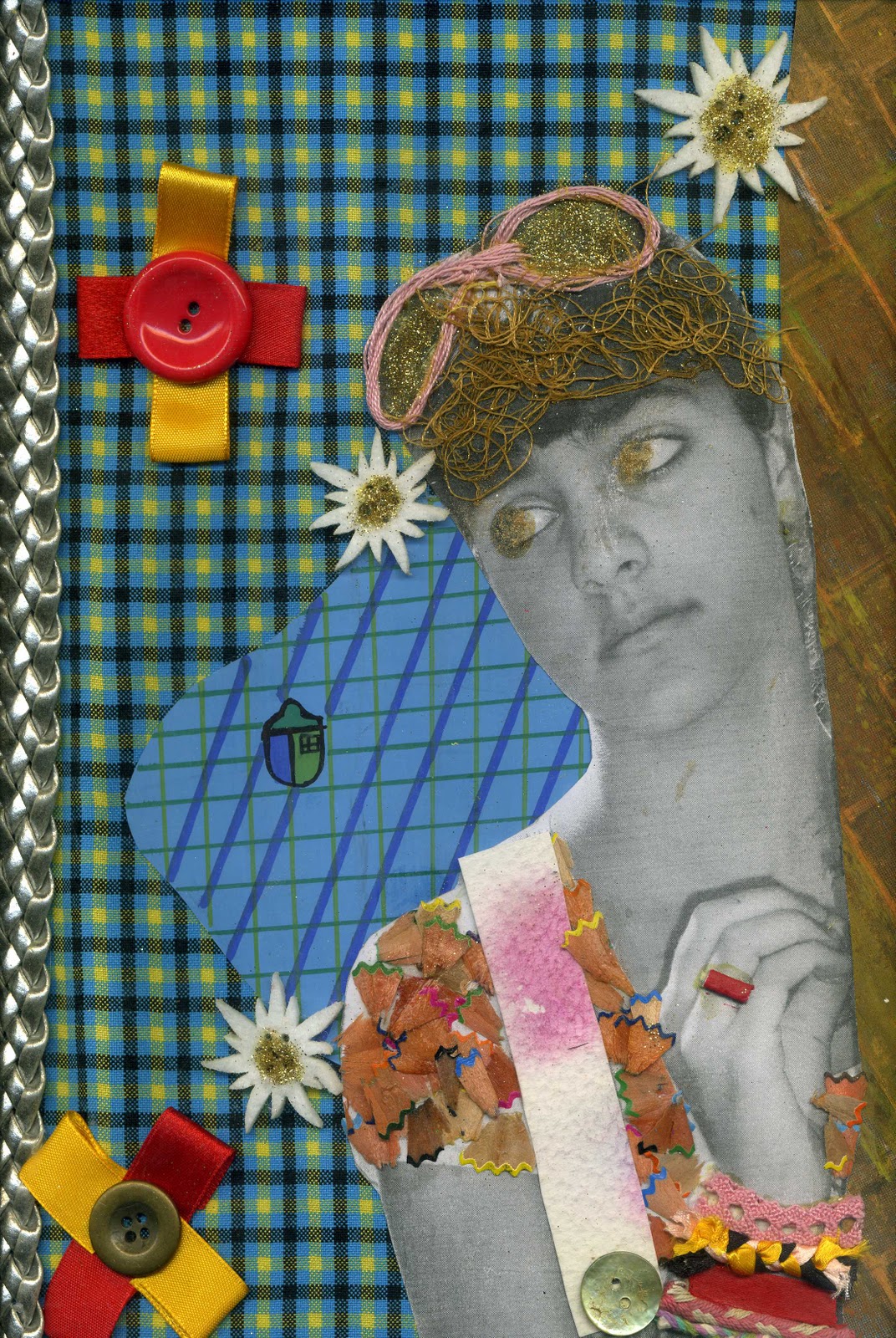
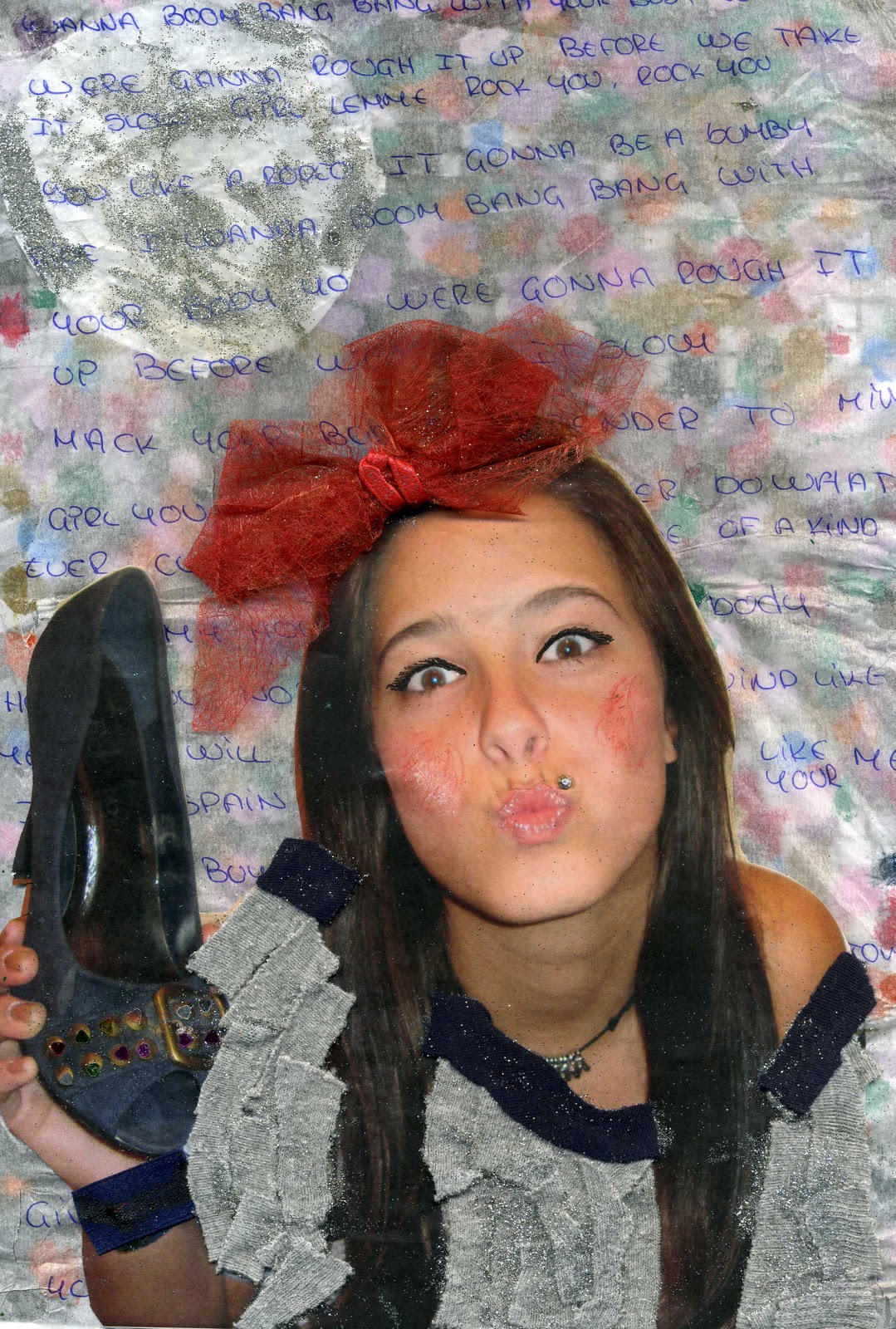
Aquí tens unes mostres per inspirar-te, extretes del bloc de Mayalen Piqueras i realitzades pels seus alumnes de 2n d'ESO:

Subscriure's a:
Missatges (Atom)